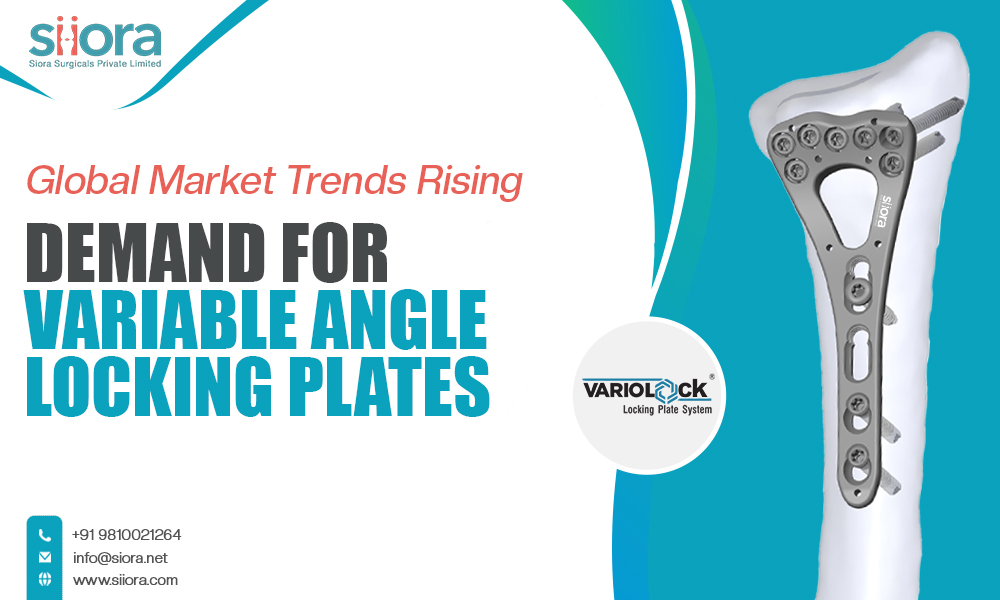
While surgical robots and new drugs often capture the spotlight, a different kind of innovation is quietly changing how surgeons treat broken bones. An advanced piece of hardware, the Variable Angle Locking Plate (VALP), provides much greater versatility and is quickly becoming the preferred tool for fracture care. This technology is being adopted worldwide, from established hospitals in North America to new medical centers across Asia. The shift isn’t just a trend; it’s a practical move toward better surgical approaches, driven by the clear clinical benefits these plates offer.
The Number One Driver: A Graying Planet
The single biggest factor fueling this demand is a simple demographic fact: the world is getting older. As bones become weaker and more brittle, the risk of fractures from simple falls skyrockets.
This presents a huge challenge for surgeons. Fixing a break in soft, osteoporotic bone with a traditional plate is like trying to put a screw into a piece of styrofoam—it just doesn’t hold. The screws can loosen or pull out, leading to implant failure and a devastating second surgery. A VALP system completely changes the game. It allows the surgeon to aim the locking screw at an angle, looking for stronger, denser bone. This ability to get a solid grip in a weak foundation is why VALP has become the go-to technology for geriatric fracture care worldwide.
Surgeons Demand Better Tools for Complex Cases
It’s not just about an aging population. We also live in a high-energy world. Fractures from car accidents, sports injuries, and other major traumas are often not clean breaks; they are chaotic, shattered messes. For a surgeon, piecing together a comminuted fracture is like solving a high-stakes jigsaw puzzle.
A traditional locking plate, with its fixed screw angles, forces the surgeon’s hand. They have to use the pre-set trajectory, even if it goes right through a small fragment they want to save. A VALP system gives them the surgical flexibility they need to be artists. They can angle screws to navigate around fracture lines, capture tiny pieces of bone, and avoid critical structures like nerves and blood vessels. As surgeons globally push for perfection, they are demanding the advanced tools that give them the control to achieve it.
The Push for Smarter, More Efficient Healthcare
The rising demand isn’t just a clinical decision; it’s also an economic one. Healthcare systems everywhere are under pressure to deliver better outcomes more efficiently. This is where two major trends converge to favor VALP systems.
First is the global shift toward Minimally Invasive Surgery (MIS). Surgeons want to fix the bone with as little collateral damage as possible. Many VALP systems are designed to be inserted through smaller incisions, which means less pain, faster recovery, and shorter hospital stays for the patient.
Second, a VALP provides a more reliable fix, which significantly reduces the risk of orthopedic implant failure. A failed implant means a costly and complex revision surgery. For a hospital or a national health service, a technology that helps ensure a “one-and-done” surgery isn’t just good medicine; it’s good economics. As developing nations expand their healthcare infrastructure, they are often leapfrogging older technologies and adopting the current, most efficient standard of care, which is increasingly VALP.
The Bottom Line
The global market for locking plates is growing at a healthy clip, projected to expand significantly in the coming years. This growth is powered by the rise of VALP technology. It’s the perfect solution for the biggest challenges in modern fracture care: an aging population with weak bones and an increase in complex, high-energy injuries. It gives surgeons the tools they need to get a better fix, and patients a better shot at a successful recovery.
 Trauma Instruments